





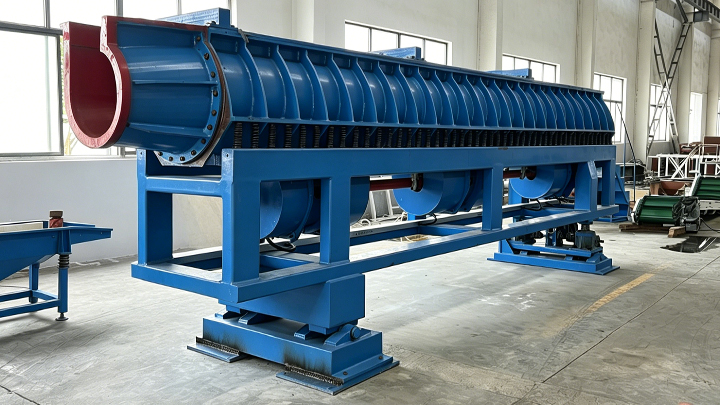
Application Scope of Mass Finishing Machines, Polishing Media and Polishing Liquids in Modern Industry
Surface mass finishing is no longer a simple auxiliary process in manufacturing. Today, it has become a standard procedure to improve workpiece safety, appearance, assembly accuracy, and corrosion resistance. The entire finishing system relies on three core elements: mass finishing machines, polishing blocks (finishing media), and polishing liquids.
Each of these three products has its own unique application scope, while they complement each other to deliver consistent, high-quality surface results across different industries, materials, and production standards. In this blog, we will clearly introduce the detailed application ranges of finishing equipment, polishing blocks, and polishing liquids, helping manufacturers select the right solution for their production needs.
1. Application Scope of Mass Finishing Machinery
Mass finishing machines including vibratory finishers, centrifugal finishers, and tumble barrels are universal automated processing equipment. Their core advantage is batch processing, non-destructive grinding, and uniform surface treatment. They cover almost all small and medium-sized metal and plastic workpieces that require deburring, edge rounding, descaling, and bright finishing.
Main Industry Applications
Hardware & Fastener Industry
Finishing machines are widely used for screws, nuts, bolts, stamping parts, lock accessories, and daily hardware. They efficiently remove sharp burrs produced by stamping, turning, and cutting, smooth sharp edges, and ensure safe assembly and comfortable touch.
Automotive & Motorcycle Parts
Engine parts, brake components, valve parts, aluminum alloy brackets, and automotive fasteners require stable surface roughness and residual stress relief. Vibratory finishing machines are the most common equipment for mass automotive part finishing to improve wear resistance and assembly precision.
Electronic & Electrical Precision Parts
Small conductive terminals, connectors, metal shrapnels, and precision stamped electronic parts cannot be processed by manual polishing due to easy deformation. Centrifugal finishing machines achieve ultra-fine, low-tolerance finishing without damaging tiny structural features.
Jewelry, Hardware Ornaments & Eyewear
Stainless steel jewelry, alloy accessories, and metal eyewear frames demand high consistency and high gloss. Precision finishing equipment provides uniform matte or bright surface effects for high-end decorative products.
Medical & Aerospace Components
Medical equipment parts and aerospace standard parts require high cleanliness and zero burrs. High-precision finishing machines ensure stable surface quality that meets industry safety standards.
2. Application Scope of Polishing Blocks (Finishing Media)
Polishing blocks are key grinding consumables. Their application scope is mainly divided according to workpiece material, hardness, and finishing requirements. Different media materials avoid scratching, over-grinding, or insufficient processing.
Ceramic Polishing Blocks
With high hardness and strong cutting force, ceramic media is suitable for hard metal workpieces, including stainless steel, iron, carbon steel, alloy steel, and cast metal parts. It is widely used for rough deburring, oxide removal, heavy burr cleaning, and medium-precision surface trimming in hardware, automotive, and machinery industries.
Plastic Polishing Blocks
Plastic media features low hardness and flexible grinding. It is applied tosoft and easily scratched materials such as aluminum alloy, copper, zinc alloy, magnesium alloy, and electroplated parts. It is ideal for fine deburring and surface smoothing without damaging the original surface plating and texture.
Natural Plant Media (Walnut Shell, Corn Cob)
Ultra-soft natural media is mainly used for ultra-fine bright finishing and cleaning. It suits high-end products like jewelry, watch parts, medical components, and precision electronic parts, effectively removing tiny dust and tool marks without causing any surface wear.
Universal Application Feature
All shaped polishing blocks (triangle, cylinder, oval, oblique column) can adapt to complex workpiece structures, including holes, grooves, concave surfaces, and irregular shapes, realizing full-angle dead-free polishing.
3. Application Scope of Polishing Liquids & Compounds
Polishing liquid is the functional auxiliary consumable that determines surface cleanliness, gloss, and anti-rust performance. Different formulas correspond to different processing stages and material applications.
Grinding & Deburring Polishing Liquid
Suitable for initial rough finishing of all metal materials. It cooperates with hard media to accelerate burr removal, oxide layer cleaning, and rust removal. It is widely used in hardware processing, casting parts, and stamping parts pretreatment.
Brightening & Mirror Polishing Liquid
Mainly used for medium and fine finishing of stainless steel, aluminum alloy, copper, and decorative hardware. It eliminates surface fog, micro-scratches, and grinding traces, significantly improving surface gloss to achieve a bright and even mirror effect.
Degreasing & Anti-Rust Polishing Liquid
Applicable to mass production scenarios requiring high cleanliness. It removes oil stains, grinding dust, and residue generated during finishing, while forming a protective film on metal surfaces. It is widely used for mechanical parts, outdoor hardware, and semi-finished products that need temporary anti-rust protection.
Material Adaptability
High-quality polishing liquids are universally compatible with ferrous metals, non-ferrous metals, and partial plastic workpieces, suitable for vibratory finishing, centrifugal finishing, and tumbler finishing processes.
Industry Matching: Standard Application Combinations
To better understand the overall application scope, here are the most widely used industrial matching solutions:
Hardware & Fasteners: Tumbler/Vibratory Machine + Ceramic Media + Grinding Polishing Liquid
Aluminum & Zinc Alloy Parts: Vibratory Machine + Plastic Media + Brightening Liquid
Precision Electronic Components: Centrifugal Machine + Plant Media + Fine Brightening Liquid
Automotive Mechanical Parts: Vibratory Machine + Ceramic Media + Anti-rust Grinding Liquid
High-End Jewelry & Ornaments: Precision Vibratory Machine + Ultra-Fine Media + Mirror Brightening Liquid
Why a Clear Application Scope Matters for Production
Many manufacturers face problems such as workpiece scratching, insufficient deburring, dull surface, rusting after finishing, and low consistency. Most of these issues are caused by mismatched machines, media, or liquids.
Understanding the clear application scope of each product helps factories: avoid unnecessary workpiece damage, reduce defective rates, improve finishing efficiency, extend consumable service life, and stabilize batch production quality. Standardized matching is the key to low-cost and high-efficiency surface finishing.
Final Summary
Mass finishing machines cover all batch surface processing scenarios from rough deburring to ultra-fine precision finishing. Polishing blocks classify processing effects according to workpiece hardness and structure. Polishing liquids control surface cleanliness, gloss, and anti-corrosion performance. The three sets of products cover almost the entire manufacturing field including hardware, automobile, electronics, medical treatment, jewelry, and machinery.
With the upgrading of industrial manufacturing, the application scope of mass finishing solutions will continue to expand, becoming an essential supporting technology for high-precision and high-quality metal product production.